
.png)
Every late summer, Luxembourg comes alive to the rhythm of the Schueberfouer, a legendary funfair that blends tradition and modernity over three weeks. Founded in 1340 by John the Blind, King of Bohemia and Count of Luxembourg, this event has stood the test of time, evolving from a simple medieval market into the largest fair in Luxembourg and the Greater Region.
The origins of a long-lasting tradition
The Schueberfouer was born in 1340, when John the Blind granted a charter establishing an annual market. Originally held on the Saint-Esprit plateau, then known as Schuedbuerg, it traditionally began on the eve of Saint Bartholomew’s Day, 24 August, and lasted eight days. The event quickly became a cornerstone of the regional economy, attracting merchants, craftsmen and farmers from surrounding areas.
For nearly 450 years, the Schueberfouer remained primarily a large market, renowned in particular for its trade in livestock, fabrics and cloth. Situated at the crossroads of major European trade routes connecting Italy and the Netherlands, it played a strategic role in the economic development of the region. From the 18th century onwards, its strictly commercial character gradually gave way to entertainment: shows, concerts, attractions, dancing and culinary delights marked the fair’s transformation into a popular celebration.
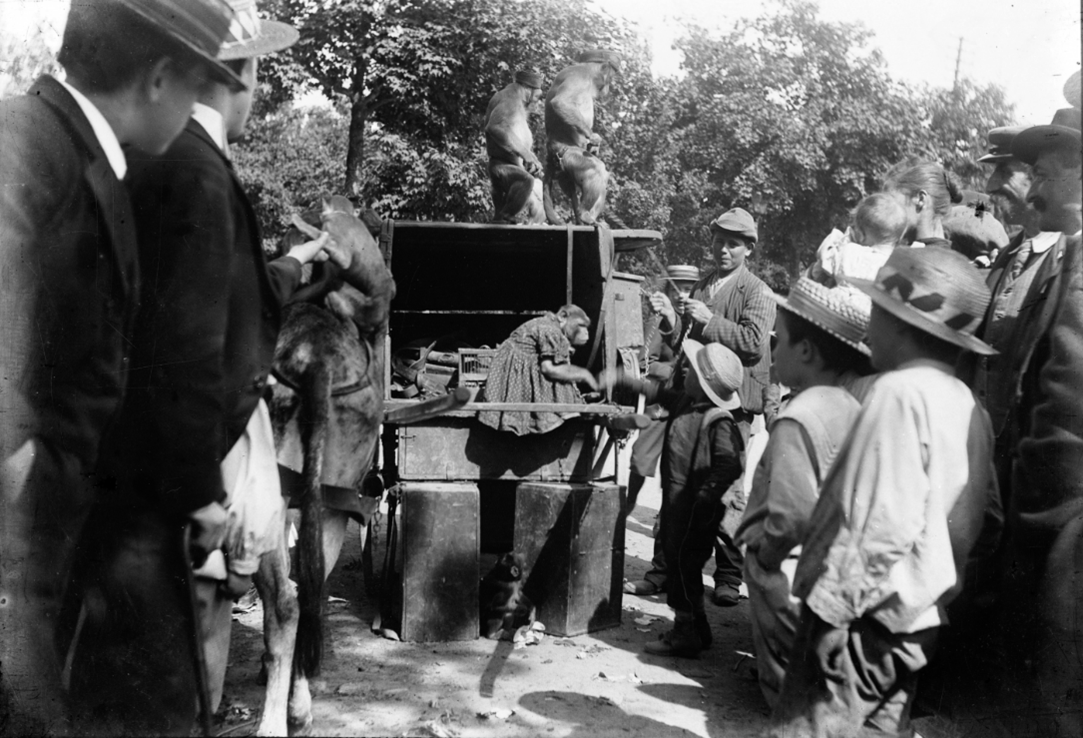
The Schueberfouer in 1899 © Ville de Luxembourg
Changes through the centuries
Over time, the fair’s name evolved, shifting from “Schuedbuerg” to “Schuedbermiss”, then “Schuebermëss”, before settling on today’s “Schueberfouer”. Some, however, suggest a different origin, linking the name to the German word Schober, once used to describe a hay storage shelter.
The fair has also changed locations several times. Initially set up on the Saint-Esprit plateau, it moved to Limpertsberg in 1610 as the original site became too small for the growing crowds. In 1893, the Schueberfouer settled permanently on the Glacis field, near the city centre, a move prompted by Luxembourg City’s urban expansion and the dismantling of its fortifications.
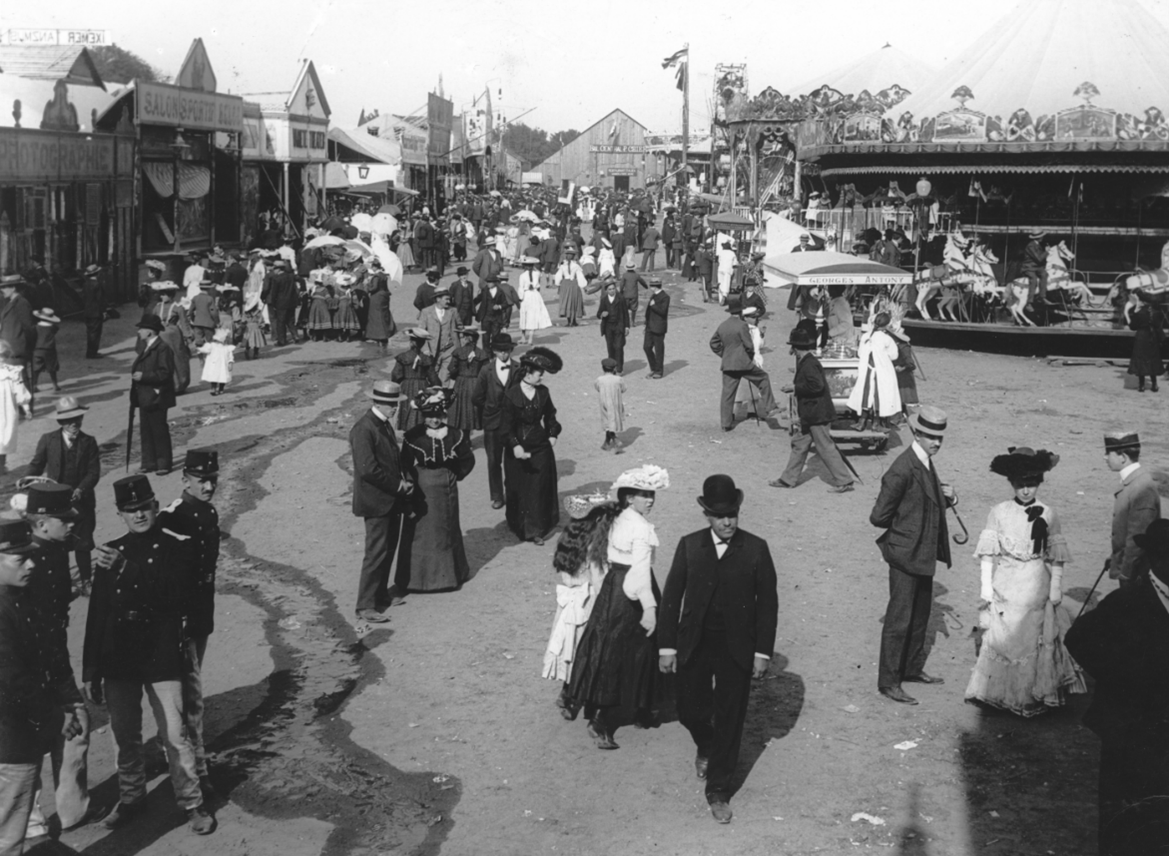
The Schueberfouer in 1904 © Ville de Luxembourg
Today, preparations begin in July, with the iconic entrance gate erected at the northern end of the fairground. By mid-August, car parks are cleared to make way for the trucks and rides arriving from Luxembourg, as well as Belgium, France, Germany and Austria, just days before the fair opens.
Between heritage and innovation
The Schueberfouer has managed to evolve without losing its soul. While thrill rides, roller coasters and high-tech attractions now dominate, many historic symbols endure. The entrance gate, traditional stalls and a warm, convivial atmosphere carry on the original spirit of a fair that reinvents itself every year.
Since 2005, Lämmy, a cheerful little sheep created by Luxembourg artist Emile “Milli” Schlesser, has been the fair’s official mascot. A nod to the Hämmelsmarsch, the traditional parade where musicians lead sheep through the streets to announce the fair’s opening, Lämmy embodies both the friendly and family-oriented character of the Schueberfouer.

Lämmy the mascot © Ville de Luxembourg
A festive highlight for Luxembourg and the Greater Region
Today, the Schueberfouer runs for three weeks, from late August to mid-September, now celebrating its 672nd edition. With hundreds of attractions, culinary delights and millions of visitors, it is the largest funfair in Luxembourg and the Greater Region. More than just entertainment, it reflects the country’s living history, its love of conviviality and its unique ability to blend tradition with innovation.
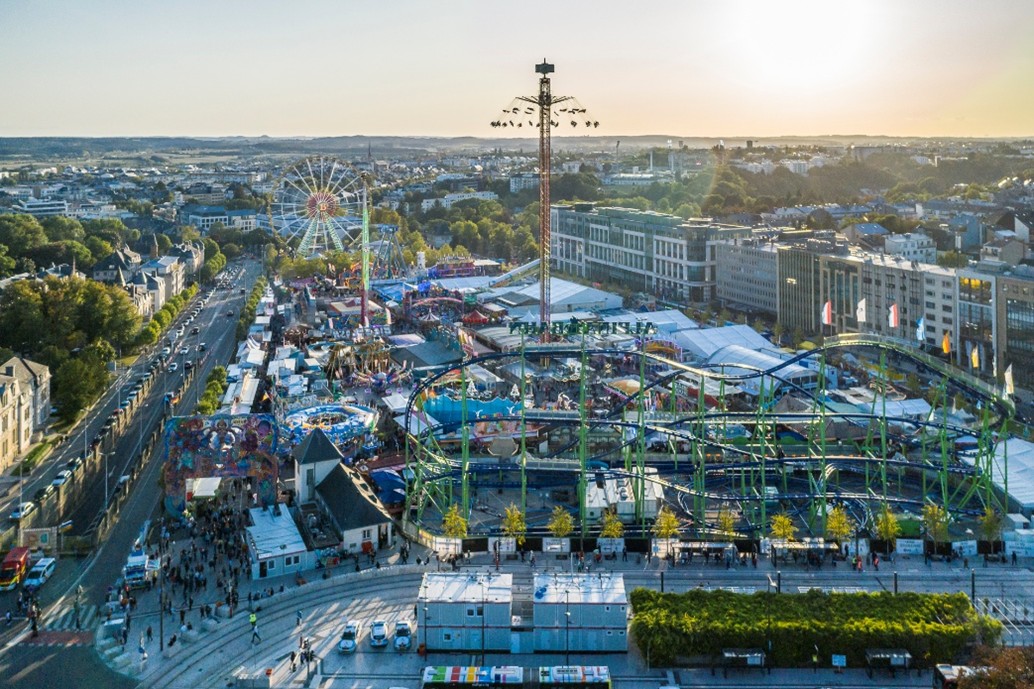
The Schueberfouer © Luxembourg City Tourist Office
Take a well-deserved break from your job search for a weekend, or enjoy a unique after-work experience, at this unmissable event, taking place from 21 August to 9 September, daily from 12pm to 1am at the Glacis Square.
Discover more about Luxembourg on our blog.