
*Cover credits: LCTO
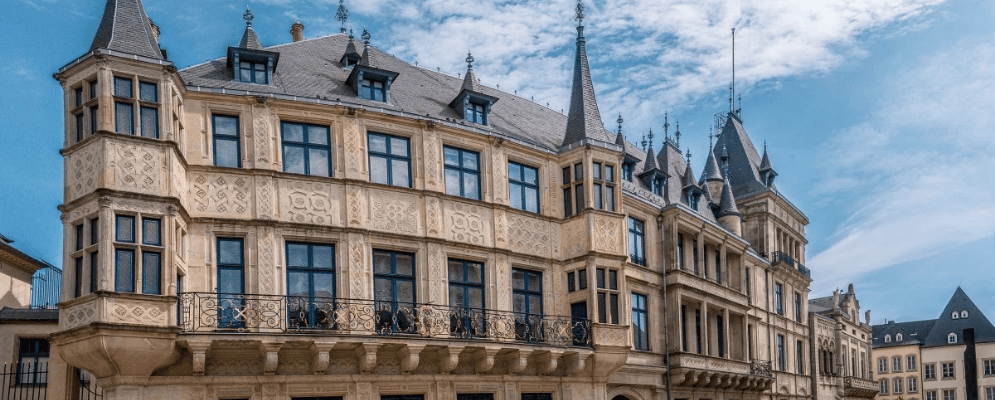
The Grand Ducal Palace, located in the heart of Luxembourg City, symbolises the close connection between the Grand Ducal Family and the population. Over the centuries, the Palace has undergone many transformations, each marking an important stage in the history of the city and the country.
The little-known history of the city hall
Before becoming the Grand Ducal Palace, the site was home to Luxembourg-Ville’s first city hall.
On 11 June 1554, lightning struck the Church of the Franciscans and ignited the gunpowder stored in the attic, causing an explosion. A large part of the city was destroyed, including the city hall. Reconstruction only began 18 years later, in 1572, and was completed the following year.
In 1683 and 1684, the building was again severely damaged during the siege of Luxembourg by French troops. Repairs didn’t begin until 1728, and in 1741, a new wing named La Balance was added to the building.
When the French administration established itself in Luxembourg between 1795 and 1814, the building became the seat of the prefecture of the “Département des Forêts” (a former French department that combined parts of present-day Belgium and Luxembourg during the French Revolution and the First Empire), underlining its central role in local administration. From 1817 onwards, the governor representing the ruler of Luxembourg both lived and worked there. In 1848, it officially became the seat of Luxembourg’s first government.
Between 1825 and 1856, the building was expanded through the acquisition of several neighbouring houses. During this period, it also housed the Chamber of Deputies, until the latter moved to the adjacent building in 1860. In 1857, the Council of State took up residence on the second floor, alongside the Archaeological Museum, the Agricultural Service and the Public Education Commission, making it a key location in public life.
From the city hall to the Grand Ducal Palace
In 1883, a new chapter began: the city hall’s reception rooms were renovated for the visit of King-Grand Duke William III of the Netherlands and his wife. But it was in 1890 that the former city hall became the official residence of the Luxembourgish sovereign, Grand Duke Adolphe. The city hall then officially became the Grand Ducal Palace.
Extensive renovation works were carried out, including the construction of a new wing in the courtyard. Grand Duke Adolphe covered most of the costs and, in 1895, brought in furniture from his various European residences.
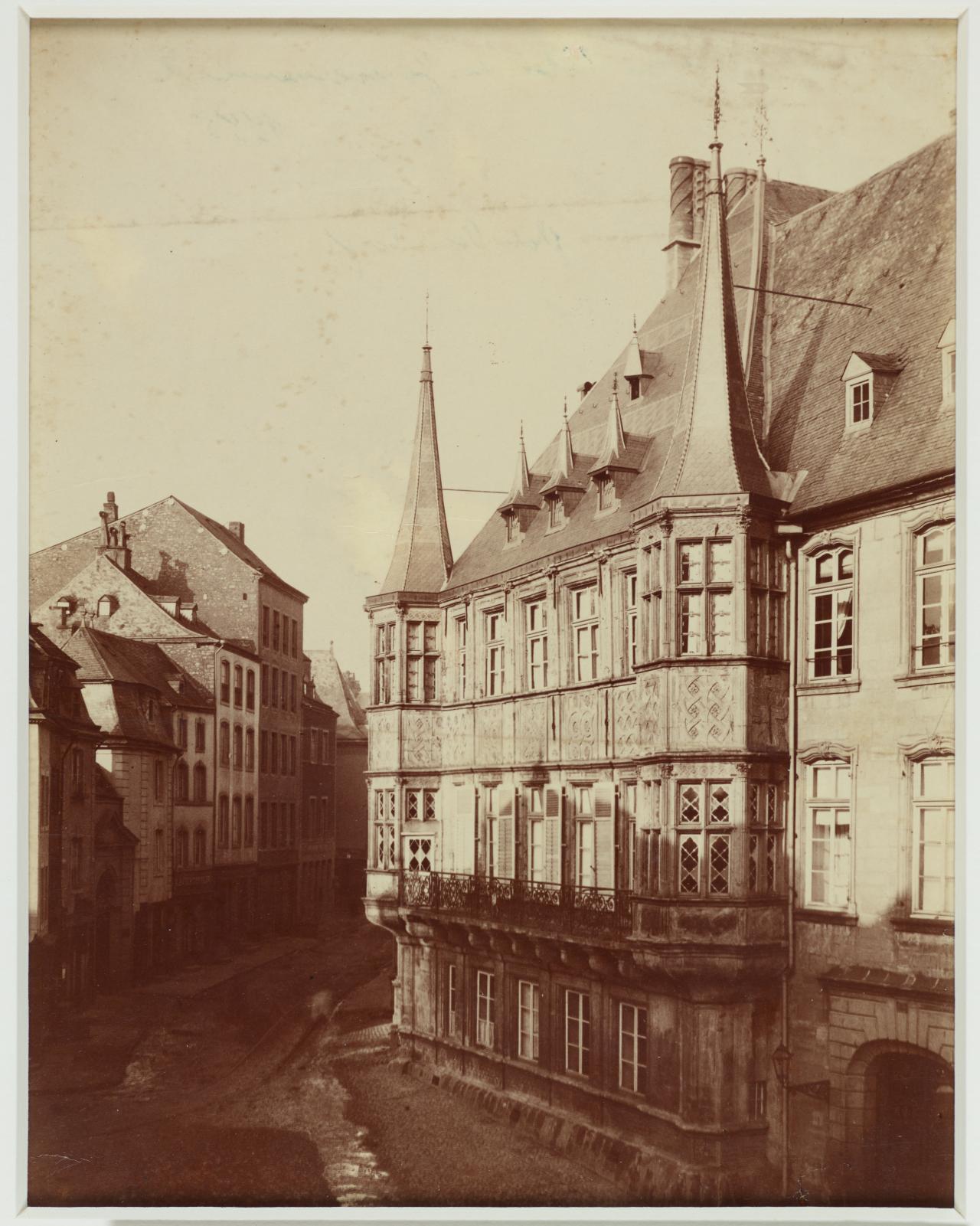
Main facade of the Grand Ducal Palace in 1890 (© monarchie.lu)
The Second World War marked a dark period for the Palace, which was occupied by German forces. It was turned into a concert hall and tavern (Schlossschenke) and was stripped of its furniture, jewellery, and artworks. It wasn’t until 14 April 1945 that Luxembourgers could once again cheer the Grand Duchess from the Palace balcony, a powerful symbol of the restored monarchy. In 1964, Grand Duchess Joséphine-Charlotte oversaw a major renovation of the Palace interiors, restoring its full splendour.
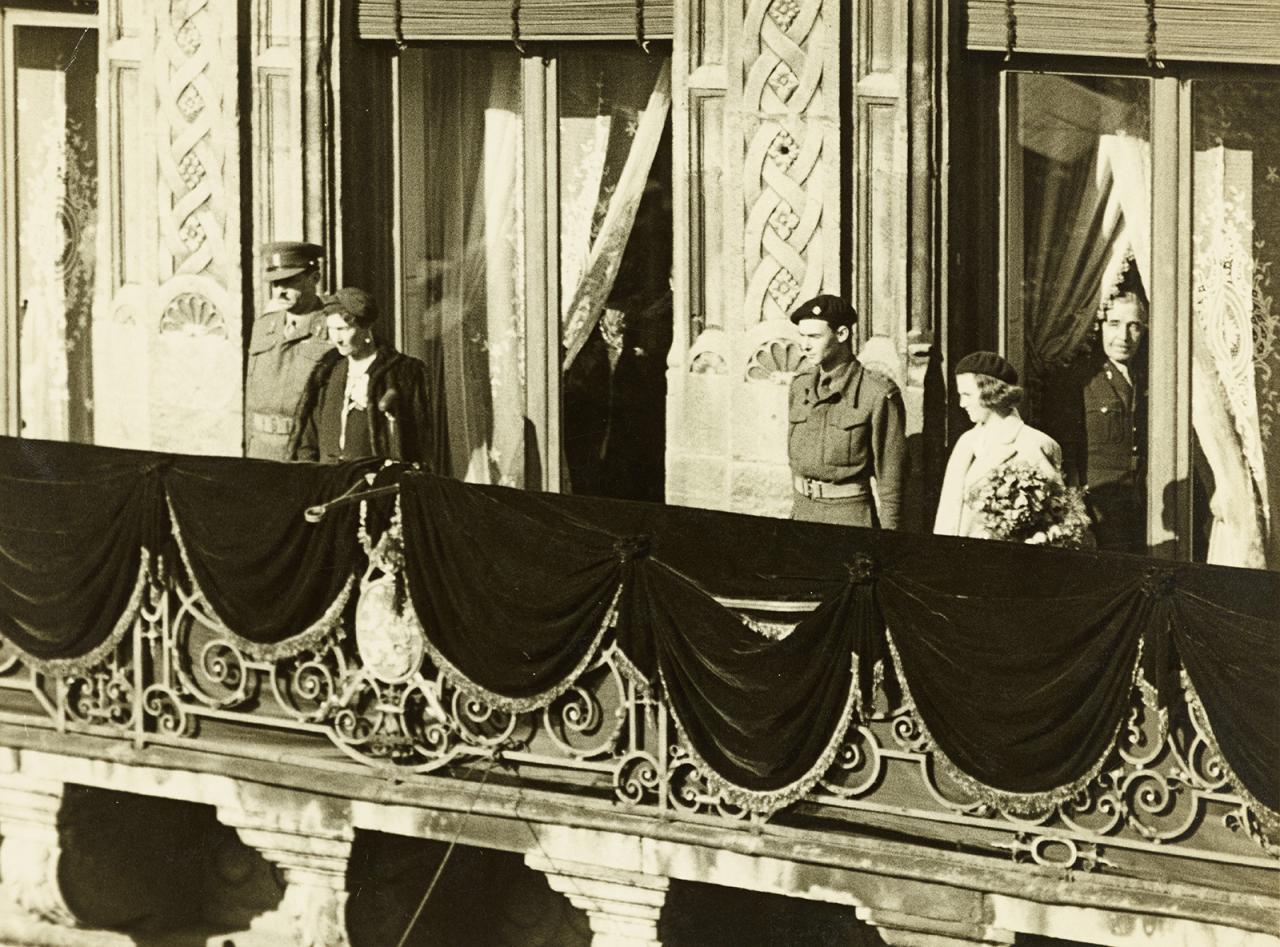
Members of the Grand Ducal Family and the Grand Duchess on the balcony of the Grand Ducal Palace, 14 April 1945 (© Collections de la Cour grand-ducale)
Visiting the Grand Ducal Palace
While the Palace may seem mysterious, it opens its doors to the public each summer. Guided tours are organised by the Luxembourg City Tourist Office (LCTO). Over 75 minutes, visitors are allowed to explore the Palace’s history and behind-the-scenes stories by walking through its most iconic rooms.

Ballroom (© Maison du Grand-Duc / Sophie Margue)
These visits are not free (unless you’re under four years old…), but it’s worth noting that all proceeds go to a charitable cause: the Grand Duke and Grand Duchess Foundation. This foundation supports humanitarian programmes to help the most vulnerable, both in Luxembourg and abroad.
As always, the LCTO expects high demand, so make sure to book your tickets in advance! In 2025, visits will be available from 17 July to 31 August.
Check out our blog to learn more about Luxembourg!