

Leaving your job is a big decision, often filled with emotions and practical questions. Notice periods, rights, obligations, severance pay... In Luxembourg, resignation is subject to specific rules that you should be aware of to avoid any unpleasant surprises.
In this article, we explain the main situations surrounding resignation in a simple and structured way.
Resignation during the trial period
The trial period allows both the employer and the employee to terminate the contract more easily.
Please note: no resignation is possible during the first two weeks, except in cases of serious misconduct or by mutual agreement.
After two weeks, notice is mandatory, calculated according to the length of the trial period:
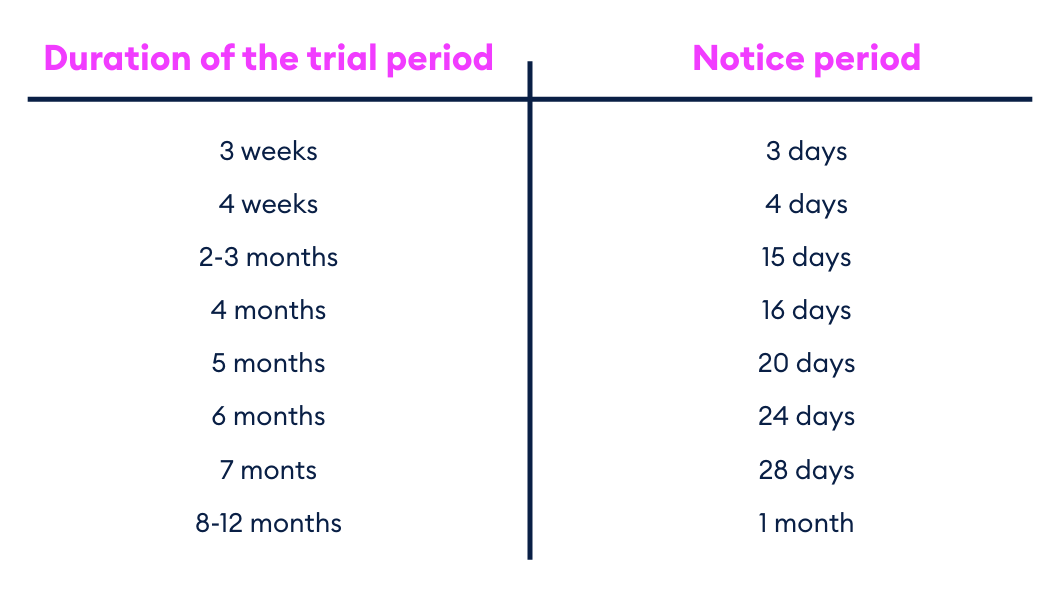
Resignation must be given in writing (by registered letter or hand-delivered against signature). No justification is required, but the termination must not be abusive.
Resignation with notice
Outside the trial period, resignation requires compliance with a notice period.
How long is the notice period?
The length of the notice period depends on your length of service with the company:
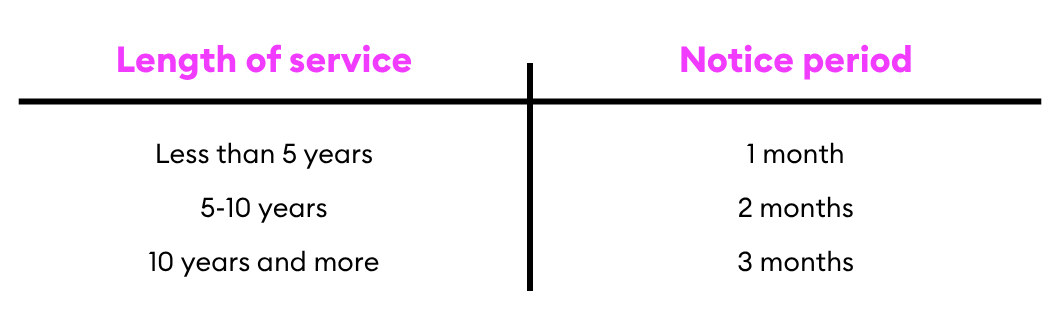
The notice period begins on the 15th of the month if the letter is delivered before the 15th, otherwise on the 1st of the following month.
How to notify of the resignation?
A simple email or verbal agreement is not legally sufficient. Resignation must be notified in writing only, either by registered letter or delivered by hand against signature.
Resignation without notice (serious misconduct by the employer)
In certain exceptional cases, an employee may terminate their contract with immediate effect, without notice. This is only possible if the employer has committed serious misconduct, making it impossible to continue the employment relationship. The misconduct must have occurred before the resignation and must be invoked within one month of you becoming aware of it.
Examples of serious misconduct by the employer:
- Repeated non-payment of wages;
- Endangering health or safety;
- Moral or sexual harassment;
- Unilateral and abusive modification of the contract.
The misconduct must be serious, genuine and provable. In the event of a dispute, the labour court will decide.
If a court recognises serious misconduct by the employer, you may be entitled to:
- Compensation instead of notice;
- Severance pay if you have at least five years of service and subject to certain conditions;
- Damages for the harm suffered.
What are your rights?
Unlike dismissal, resignation does not entitle you to severance pay. However, you do retain certain rights:
- Payment for any untaken annual leave;
- Certificate of employment;
- Certificate for the ADEM;
- Salary maintained until the end of the notice period.
Please note that you will not be immediately eligible for unemployment benefits! A waiting period may apply if you register with the ADEM after resigning.
What are the risks if you do not respect your notice period?
If you leave your job without complying with the notice period, your employer may claim compensation and take the matter to the labour court. In addition, it may damage your professional reputation. So think carefully before making such a decision.
Resigning in Luxembourg is a right, but it involves specific legal obligations, particularly regarding notice periods. Before making your decision, take the time to assess the financial and professional consequences. If in doubt, do not hesitate to contact the Inspection du Travail et des Mines (ITM), ADEM, or a specialist in employment law.
See also:
Dismissal in Luxembourg: your rights
Mutual termination of an employment contract in Luxembourg
Find out more about labour law in Luxembourg on our blog.